Body weight
Wall walk
Wall walk mainly works your front shoulders and side shoulders. It also helps your triceps, abs, upper back, and forearms.
Step by step
- Lie face down, toes at the wall, hands under your shoulders.
- Push up, then walk your feet up the wall as your hands walk closer.
- Pause with tight abs, then walk back down slowly.
What you should feel
Work in your shoulders and core as you hold yourself near the wall. Your lower back should not sag or ache.
Common mistake
Letting your lower back sag; squeeze your abs and glutes, and walk up less far.
Sets and reps
- To build muscle: 3 to 4 sets of 8 to 12 reps, resting 1 to 2 minutes.
- To get stronger: 3 to 5 sets of 3 to 6 reps, resting 2 to 3 minutes.
- For endurance: 2 to 3 sets of 12 to 20 reps, resting under a minute.
Alternatives for the same muscles
No machine, no barbell, or something hurts? These work the same muscles.
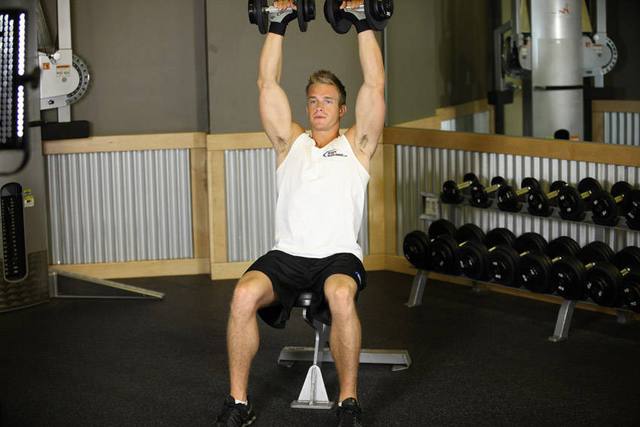 Seated dumbbell pressFront shoulders, Side shoulders
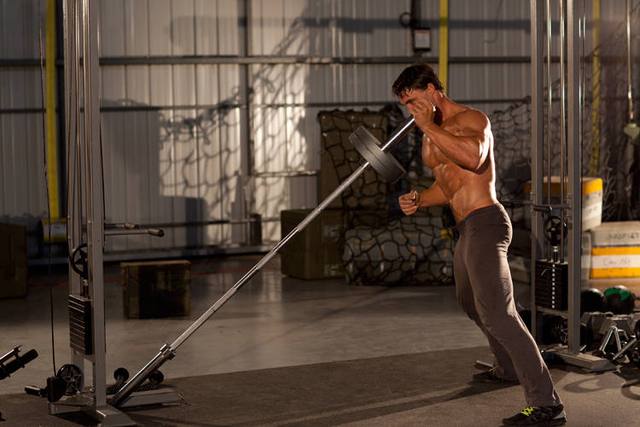 Landmine pressFront shoulders, Chest
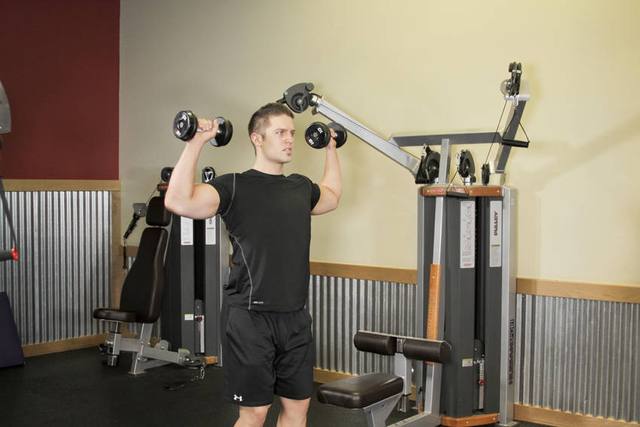 Dumbbell shoulder pressFront shoulders, Side shoulders
 Arnold pressFront shoulders, Side shoulders
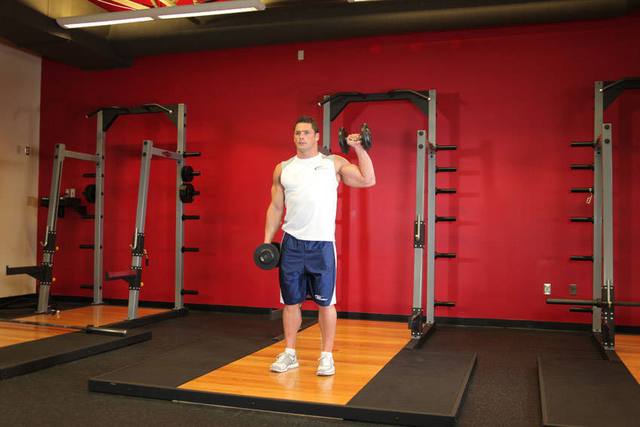 Half-kneeling one-arm pressFront shoulders, Side shoulders
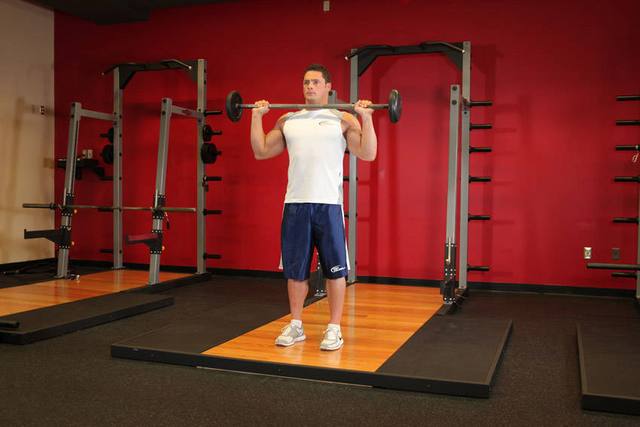 Overhead pressFront shoulders, Side shoulders
Questions
What muscles does the wall walk work?
Wall walk mainly works your front shoulders and side shoulders. It also helps your triceps, abs, upper back, and forearms.
Can I do the wall walk at home?
Yes. You only need your body weight and a little floor space.
How many sets and reps of the wall walk?
To build muscle: 3 to 4 sets of 8 to 12 reps, resting 1 to 2 minutes. To get stronger: 3 to 5 sets of 3 to 6 reps, resting 2 to 3 minutes. For endurance: 2 to 3 sets of 12 to 20 reps, resting under a minute.
Warm up for 5 to 10 minutes first. Stop if something hurts (sharp pain, not effort), and check with a doctor if you have a health condition.
JOGO Fuel
Get a training plan built around your goal
Save it, log your meals, get days built around your games and a coach that explains every change. Free, with your JOGO account.
Start free